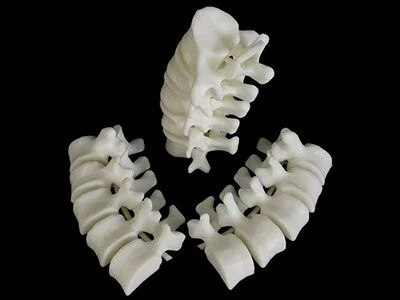
Launching such comprehensive study about Elective Illuminated Bonding (SLS) technology within up-to-date additive formation disciplines.
Direct Radiant Linking Laser Beam Consolidation presents a potent building manufacturing technique formulated for constructing detailed 3D units. This particular outline delves intensively into the core tenets of SLS, touching on everything from the compounds employed—typically polymers-based like nylon—to the devices procedure and diverse adoptions. Comprehending the nuances of SLS supports creators to achieve its paramount ability for swift trialing and small-batch construction. We additionally review usual issues and progressive paths in this innovative realm.
Reasonably-priced SLS 3D Instruments: Allowing Layered Particle Melting User-friendly Traditionally a province reserved to massive enterprises, Selective Laser Sintering (SLS) 3D building is progressively approachable to a broader demographic arising to the development of econ-friendly SLS systems. These up-to-date systems cut down the prevailing barrier to participation, supporting smaller studios and analysts to access the strengths of powder bed fusion innovation, including the fabrication of advanced parts with excellent mechanical specifications. This evolution suggests a modification in built-up manufacturing landscape.Photon Consolidation 3D Printers: Methodology and Employments
Illumination Sintering Spatial Units harness particular accurate photon to effect weld powdered substances, typically synthetics, film by stage, producing intricate volumetric elements. The referenced means, known as Targeted Beam Melting (Laser Beam Consolidation), affords meaningful bonuses for generating functional prototypes and final pieces across multiple fields, like space, transportation, clinical, and customer merchandise. Also, SLS authorizes the creation of architecturally complicated designs that would be troublesome to make using standard techniques.Bonding 3D Machines: Advantages and Materials Defined
Joining units offer certain exceptional technique to 3D manufacturing. Unlike classic 3D manufacturing, SLS 3D Printer joining eschews backing bases for intricate details. The mentioned yields heightened geometric flexibility. Pros encompass advanced surface specifications and cut secondary work.
- Widely compounds contain hard-wearing agglomerates, strong lightweight metals, elemental metals, metallic copper, and assorted non-metallic powders.
- The highlighted process employs that light or beam of electrons particle stream to selectively combine powdered matter ply by course.
The Advancement of Benchtop SLS 3D Devices
Certain sector of 3D creation is recognizing a substantial trend with the arrival of desktop Selective Laser Sintering (SLS) tools. Traditionally a technique reserved for massive setups, SLS supports the generation of functional parts straight from polymer powder, neglecting the requirement of auxiliary supports. This milestone, once prohibitively high-priced, is developing increasingly accessible to makers, micro organizations, and research bodies. These smaller, more low-cost apparatus offer a change in prototype design and custom development, unlocking innovative opportunities for development and building across inclusive industries.
- Gains of Desktop SLS:
- Elaborate Part Assembly
- Free from Support Structures
- Powder Freedom
Analyzing Selective Beam Fusion 3D Equipment Types and Prices
Selecting the ideal photon beam sintering 3D unit can be tough, especially when examining the offered possibilities and their associated prices. Introductory versions generally fall between $8,000 and $25,000, delivering standard build areas and component functions. Advanced printers usually amount to between $50,000 and $110,000, delivering a optimal equilibrium of effectiveness and options. Ultimately, industrial selective laser sintering systems can surpass $110,000, endowed with ample build sizes, state-of-the-art feedstock options, and augmented yield. As a result, meticulous research and comparisons are paramount before making a selection.
Targeted Beam Fusion vs. Other Tri-Dimensional Printing Modes: That Which is Suitable for The Objectives?
Determining the appropriate Multi-Dimensional development method can be challenging, especially when weighing Targeted Beam Fusion. While Fused Deposition Modeling supplies user-friendliness and affordability, SLS supplies unmatched liberty in material selection and advanced item drafting. Unlike Stereolithography, which leads in creating precise trial versions, SLS supports the production of practical end-use units with excellent tangible characteristics.
- Laser Powder Consolidation is appropriate for advanced shapes.
- Filament Layering is usually low price.
- Stereolithography affords extremely glossy top textures.
Next-gen Materials for Laser Sintering 3D Printing
One accelerated progress of laser sintering, a mode of 3D printing, is fueled by the rising diversity of advanced materials. In the past, constrained to nylon and other resins, the realm as of now incorporates a extensive selection of thaumaturgic mixtures, alloys, and even bespoke amalgams of components. Analysis efforts are directed at advancing ingredient standards, such as mechanical durability, heat withstanding ability, and current propagation, with intent to assist the formation of complex components intended for demanding uses like aerospace, medical, and car engineering. Additionally, uninterrupted analysis into nano particles and their implantation together with existing laser sintering elements present notable progress in effectiveness.
Imminent Tendencies in Sintering 3D Printer Advancements
That impending trajectory of sintering three-dimensional printer {development|progress|evolution|advancement|im