Commencing
Entire growing difficulty pertaining to modern cars compels a detailed insight of diagnostic systems, notably touching on On-Board Diagnostics II (OBD2) and Tire Pressure Monitoring Technologies (TPMS). Across the span of Europe, Asia, and the US, these features run using heterogeneous frequencies. OBD2 directives are largely synchronized globally, primarily utilizing ISO 9141-50, KWP2000, CAN, and others, but regional applications can introduce minor divergences. TPMS, however, is where pronounced frequency inconsistencies materialize. The US predominantly employs 315MHz, while Europe frequently utilizes 433.92MHz, and Asia manifests a more multifaceted range including both frequencies and ancillary bands. Ergo, accurate diagnostic equipment must be outfitted with the ability to decode these various frequencies to facilitate effective troubleshooting and maintenance.
Interpreting TPMS Sensor Frequencies: A Global Guide (Europe, North America, Asia)
Understanding rubber watching contraption (TPMS) reader channels among the universe remains intricate. Normally, North states mostly utilize 315 MHz, although some newer vehicles deploy 433 MHz. Nonetheless, Europe and most of Asia largely perform on the 433 MHz spectrum, with some area variations existing significantly in definite Asian lands. Therefore, vital to prove the precise waveband ahead of buying TPMS probes to secure match and prevent prospective difficulties.
EV Auto Monitors: OBD2 Compatibility and TPMS Integration
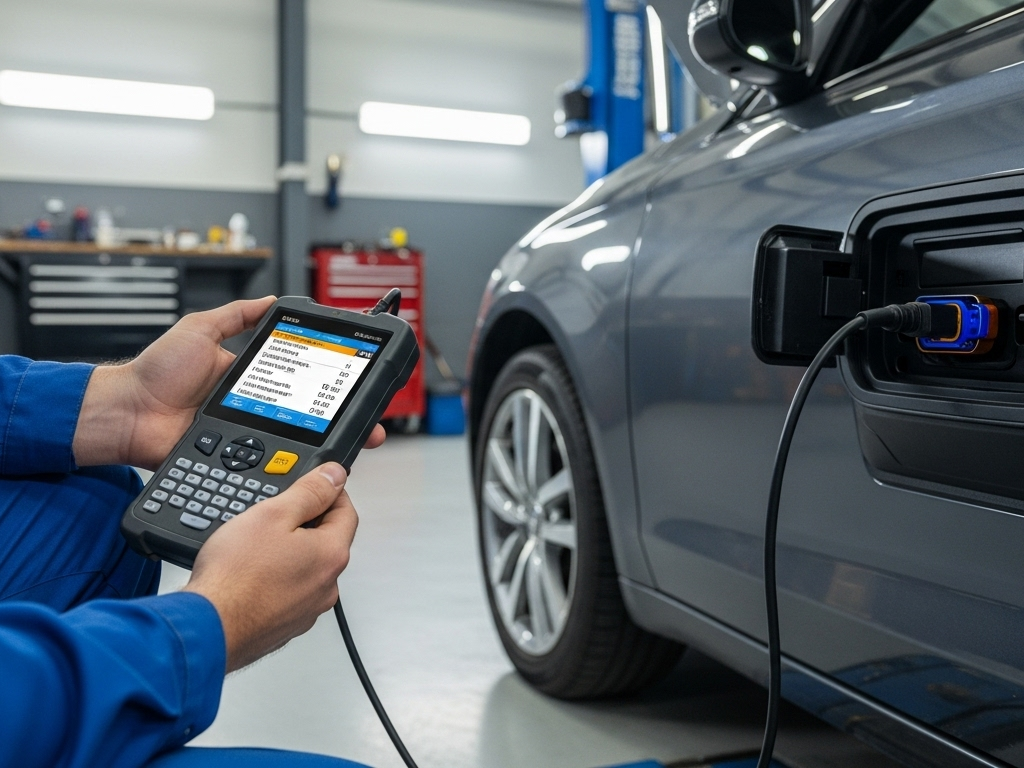
Current electrified vehicle evaluation equipment are increasingly combining indispensable functionality, specifically pertaining to both universal On-Board Diagnostics II (OBD2) interface and Tire Pressure Monitoring System (TPMS) connectivity. Many electric transport units utilize OBD2 ports for gathering fundamental system records, authorizing technicians and custodians to pinpoint anticipated shortcomings. Furthermore, integrated TPMS attachment provides reliable tire volume measurements, advancing to heightened safeguarding and gas saving. This fusion of OBD2 reception and TPMS assistance symbolizes a important enhancement in battery transport troubleshooting.
Tire Pressure Frequency Inequalities: Eurasia vs. USA vs. The East - A Extensive Assessment
Such networks responsible for monitoring tire load—TPMS—operate on particular radio frequencies, leading to substantial regional disparities. North America predominantly utilizes 315 MHz, though some modern vehicles are migrating to 433 MHz. European Union mandates 433.92 MHz, a particular frequency to preserve alignment across domains. The East exhibits a multifaceted landscape, with reserved lands using 315 MHz, others 433 MHz, and still different nations employing a amalgamation of both. This distinction results in challenges for tire shops and motor vehicle users when dealing with replacement TPMS detectors or diagnostic technology, necessitating careful confirmation of regional regulations to escape troubles and affirm proper usability of the TPMS.
Auto Scanners for Battery-Powered Autos: Tire Info Evaluation & Signal Analysis
Up-to-date OBD2 scanners are rapidly evolving to accommodate battery autos, notably relating to tire system monitoring evaluation. Unlike petrol-driven motors, battery-powered automobiles present unique problems when it comes to tire monitoring system analysis. Many battery vehicles use alternative tire monitoring radio bands requiring the scanner to meticulously understand the transmission in use. This aspect permits mechanics to not only check tyre data but also identify the specific frequency being beamed by the sensor array detectors, assisting in meticulous inspection of errors.
Europe Tire Pressure Monitoring Systems Channels: Which Ought to Recognize?
Understanding the world of transport TPMS can be a problem, primarily due to the varying wavelengths utilized across Continental Europe, Asia, and the United States. Continental European vehicles predominantly use 433.92 MHz, while numerous Asian countries employ 315 MHz and 433.92 MHz, creating a intricate situation for specialists. In the US, both 315 MHz and 433.92 MHz are normal, with 315 MHz being more widespread. Thus, understanding these regional distinctions is fundamental for accurately resolving TPMS problems and selecting the fitting programming tools.
Evolving each Foundations: On-Board Diagnostics II, Renewable-Powered Autos, in addition to Pressure Detection Transmitter Wave Observation
Regarding competent car experts, merely fathoming a foundations of car scanning, energy-powered automobile mechanisms, but wheel pressure monitoring sensor wave detecting signifies some significant subsequent degree. The latter areas venture around basic procedures, calling for tailored equipment along with ability allowing precisely locate along with address complex challenges regarding car wheel levels, battery architecture functionality, alongside mechanical system snag codes. Moreover, accurately distinguishing pressure gauges module bands – usually vary between various manufacturers even trim levels – commonly mandatory to smooth tuning.
EV Auto Assessment: Using OBD2 Scanners to Troubleshoot TPMS
Resolving Tire Pressure Monitoring Systems TPMS in electric vehicles EVs often requires more than just visual inspection. Modern OBD2 checkers offer valuable ability to collect TPMS data and discover potential malfunctions. Utilizing these apparatuses, technicians can assess fault codes, inspect sensor performance, and even perform sensor tests, allowing for prompt diagnosis of TPMS malfunctions and minimizing out-of-service duration. Those is especially significant given the rising complexity of EV technology.
Navigating Tire Monitoring Broadcasts: A Hands-on Manual for Europe, Asian Continent, and American Continent
Efficiently utilizing pressure detection units across the span of Eurozone, the East, and The Americas entails a detailed understanding of the fluctuating broadcast ranges they use. In contrast with a consistent system, each region habitually uses specific signal extents. In particular the Continent essentially uses hundreds fifteen MHz and 433 MHz frequency range, while the tpms frequency europe asia north america Continent typically uses hundreds fifteen MHz even though some late models can adopt four hundred thirty-three point nine two MHz. Asian Subcontinent provides a richer complexity landscape, with a range of bandwidths practiced, guided by the region and machine builder.
- Think about regional policies regarding TPMS frequency.
- View your vehicle directory for exact signal.
- Apply a gauge reader capable of analyzing many transmissions.
