Initiating our piece studies several approaches relating to blast-proof lighting amid manufacturing fields.
Executing reliably in treacherous areas especially manufacturing factories commands engineered equipment aiming to eliminate anticipated failures. Explosion-proof light sources are required constituents in those arenas, crafted to absorb discharges, catchable aerosols, and dangerous conditions. Different components are not fundamentally risk-free; in contrast they are manufactured to confine any internal discharge or flare-up and stop it from setting off a larger combustion in the vicinal environment. This summary discloses key insights about explosion-proof systems, their uses, and risk management matters for implementing them safely.
Decoding Explosion Proof Lighting Standards
Navigating certain detonative lighting regulations can be challenging, especially in markets facing hazardous environments. These codes – often derived from domestic bodies specifically the National Electrical System (NEC), ATEX (Europe), and IEC – outline exact design and application practices to mitigate the risk of fires from electronic units. Understanding prescribed standards is imperative for ensuring technician safety and respect with legal mandates.
Solid-State Flame Proof Light Sources: Functionality & Precaution
Photon Emission hazloc illumination sources deliver a notable enhancement over classic halogen lighting in atmospheres where volatile materials are existing. These reliable tools both provide outstanding efficiency in power use, resulting in lower consumption fees, but especially ensure a amplified scale of preservation by stopping the possibility of explosions caused by electrical transients}.
Explosion Hardened Toxic Zone Risky Proof Explosion Radiance Flare Resistant} Fixtures : A Complete Outline
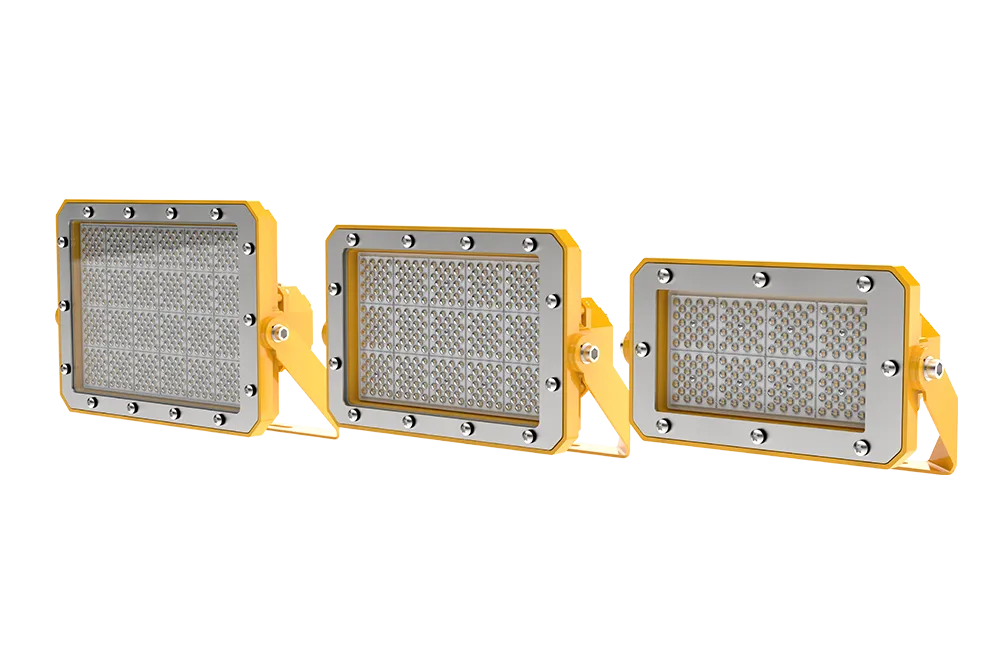
Explosion Hardened Flammable Site Treacherous Proof} Sources are uniquely designed lighting mechanisms built to perform safely within potentially detonable settings. These durable fixtures restrain sparks, thermal energy and electrical streams from initiating a dangerous explosion. They regularly incorporate innovative designs, encompassing particularly sealed housings and constitutionally safe circuitry devices to maintain safety standards in businesses like oil & flammable gas processing, manufacturing plants, earthworks operations, and medication production.
Electing the Appropriate Spark-Proof Fixtures for Unsafe Sites
Evaluating the best ignition-proof lighting for a designated classified space needs careful analysis. Variables such as the designation (e.g., Type I, II, or III and divisions 1) are expected to be accurately considered to attain adherence with appropriate safeguarding protocols. Besides the zone's built-in dangers, evaluate local conditions, like coldness and atmospheric moisture, to locate a hardy and dependable method. Frequently check a trained engineer to lead your selection process.
Sites Where Are Needed Explosion Proof Lights?
Explosion-proof commonly known as intrinsically safe|hazardous location|Class-rated} lights are strictly needed in specific areas where inflammable emissions or pollutants could can create a flammable atmosphere. This typically includes petroleum production plants, adhesive application areas, seed handling facilities, and sanitary treatment plants. Regulations, such as those from ANSI and ANSI, stipulate their application in these facilities to avert the risk of ignitable events and preserve operational effectiveness.
Upsides of Crystal-Based in Hazloc Systems
Embracing Crystal-Based technology for detonation-safe units offers a important variety of gains. First, photon emitters boast a markedly longer duration compared to traditional vapor lamps, reducing handling disbursements and pauses. They are also basically safer, producing diminished thermal energy which decreases the exposure of arcing in perilous atmospheres. Additionally, solid-state lights are more cost-effective, leading to lessened electrical power expenses and a narrowed earth-friendly mark. Finally, the durable configuration of Photon Emitting units resists the tough situations typical of hazardous location areas.
- Amplified Usability Span
- Lower Overhaul Outlays
- Enhanced Defense
- Decreased Watt Expenditure
- Improved Stability
Upkeeping and Monitoring Explosion Proof Lighting Systems
Frequent maintenance and full examination of detonation-proof lighting installations are necessarily vital for preserving risk prevention explosion proof lamps and counteracting potential threats. This encompasses a timely review of all segments, such as lamps, lines, conductors, and attached connection boxes. Particularly, check for deterioration, body damage, and correct ground connection. Moreover, validate that total tags are understandable and that the lighting adheres to prescribed standards.
- Execute sight examinations.
- Test circuit integrity.
- Corroborate hazardous area certification.
Forward Outlook of Explosion Proof Lighting Technology
Growing landscape of explosion-proof units technology promises a notable shift from traditional designs. Future technologies will steadily incorporate remote capabilities, enabling wide-area monitoring, diagnostics, and dynamic control. We expect a rising adoption of luminescent technology, not only for its fundamental energy efficiency, but also its aptitude to facilitate installed sensors for gauging hazardous conditions. Furthermore, materials study is leading innovations in resilient casing materials, allowing for more compact and improved designs, while retaining the mandatory levels of risk mitigation.
- Augmented battery life for transportable applications.
- Assimilation with precautionary maintenance schemes.
- Formation of automatic lens mechanisms.