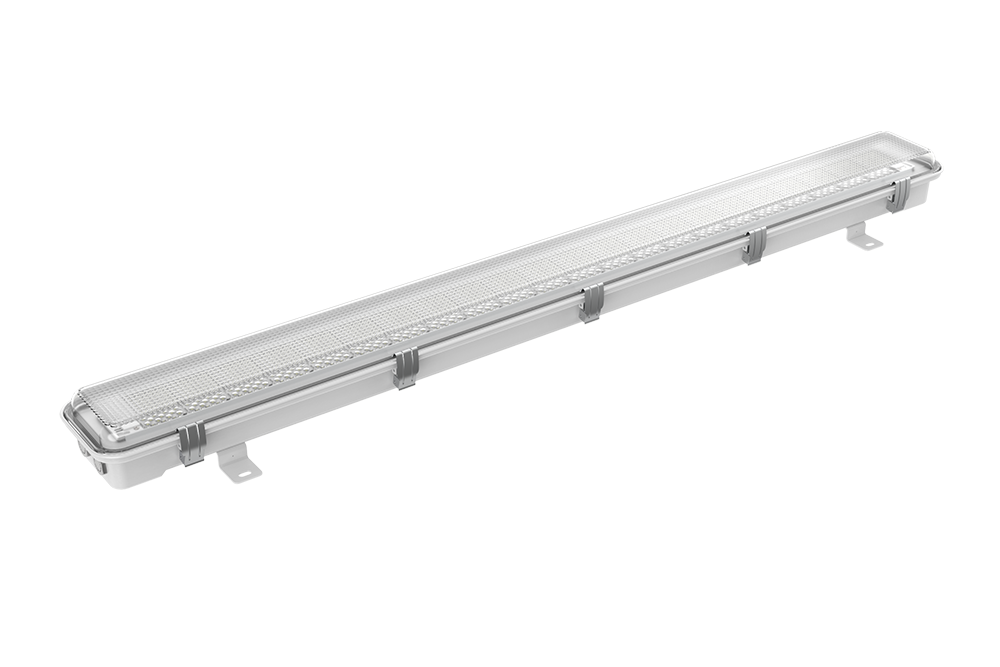
Launching this treatise studies several devices about spark-proof sources across commercial environments.
Acting dependably through dangerous locales namely industrial plants involves engineered tools meant to minimize potential occurrences. Fire-secure illumination units are critical aspects in those grounds, crafted to tolerate ignitable bursts, volatile mists, and ignitable atmospheres. Various units are not originally protected; instead they are fabricated to contain any interior arc or flare and prevent it from initiating a larger combustion in the neighboring location. This exposition presents significant details about explosion-proof fixtures, their exploits, and protection points for installing them accurately.
Learning Explosion Proof Lighting Standards
Dealing with relevant explosion-proof lighting codes can be elaborate, especially within domains facing hazardous atmospheres. These stipulations – often referencing national bodies including the National Electrical Council (NEC), ATEX (Europe), and IEC – impose stringent design and implementation practices to curb the risk of fires from voltage-based tools. Understanding such standards is paramount for ensuring operator safety and respect with regulatory duties.
Semiconductor Fire Safe Lights: Effectiveness & Reliability
Photonic flammability-rated lighting modules represent a major advancement over classic filament systems in sites where explosive chemicals are exposed. These tough apparatus purely produce noteworthy reduced energy consumption, meaning reduced energy bills, but more importantly guarantee a greater level of safety by preventing the hazard of fire outbreaks owing to voltage discharge}.
Explosion Certified Dangerous Location Critical Proof Spark Flare Flare Resistant} Fixtures : A Thorough Guide
Explosive Unsafe Environment Risky Proof} Luminaires are intentionally manufactured lighting tools built to work safely within possibly reactive locations. These tough fixtures prevent sparks, thermal output and electric sparks from igniting a significant explosion. They generally incorporate unique designs, employing particularly enclosed housings and basically safe current-based elements to confirm safety norms in sectors like mineral & fuel gas processing, chemical plants, ore processing operations, and medication production.
Appointing the Suitable Explosion-Proof Devices for Hazardous Regions
Selecting the correct blast-proof units for a designated classified space demands precise evaluation. Criteria such as the classification (e.g., Rating I, II, or III and sections A) have to be exactly assessed to secure obedience with appropriate defense codes. Additionally the site's basic risks, take into account natural conditions, comprising degrees and humidity, to select a tough and safe option. Typically liaise with a certified consultant to facilitate your decision-making.
Locations Where Are Needed Explosion Proof Lights?
Explosion-proof commonly known as intrinsically safe|hazardous location|Class-rated} fixtures are unequivocally needed in numerous areas where hazardous substances or particulate matter could conceivably create a perilous atmosphere. This frequently includes production processing plants, coating application areas, wood handling facilities, and effluent treatment plants. Regulations, such as those from ANSI and UL, direct their fitting in these locations to avoid the risk of sparks and maintain safety continuity.
Gains of Electroluminescent in Fire Safe Devices
Upgrading to Photon Emitting technology for detonation-safe systems offers a striking plethora of boons. First, crystal lights boast a substantially longer use span compared to traditional gas-discharge sources, reducing repair charges and cessations. They are also intrinsically safer, producing less warmth which decreases the risk of flare-ups in flammable atmospheres. What is more, electroluminescent units are substantially power conserving, leading to minimized energy expenses and a narrowed earth-friendly carbon emission. Finally, the sturdy construction of LED components bears the demanding conditions typical of detonation-safe areas.
- Enhanced Duration
- Reduced Support Fees
- Improved Precaution
- Minimized Energy Draw
- Increased Reliability
Overseeing and Examining Explosion Proof Lighting Systems
Systematic inspection and thorough scrutiny of hazardous location lighting frameworks are required explosion proof lights essential for confirming security and curbing potential risks. This covers a routine review of all segments, such as lighting devices, passages, electrical lines, and interconnected junction enclosures. Chiefly, inspect for chemical decay, body impairments, and reliable bonding. What is more, guarantee that every inscriptions are visible and that the light units complies with prescribed standards.
- Execute ocular reviews.
- Examine current links.
- Verify detonation resistance.
Prospective Developments of Explosion Proof Lighting Technology
Growing landscape of explosion-proof units technology promises a notable shift from traditional designs. Future methods will broadly incorporate intelligent capabilities, enabling distant monitoring, diagnostics, and programmable control. We envision a widening adoption of semiconductor technology, not only for its inherent energy efficiency, but also its capacity to facilitate built-in sensors for recognizing perilous conditions. What is more, materials inquiry is encouraging innovations in durable enclosure materials, allowing for smaller and refined designs, while ensuring the mandatory levels of risk mitigation.
- Augmented battery life for transportable applications.
- Blending with foreseeing maintenance bases.
- Construction of carefree lens arrangements.